
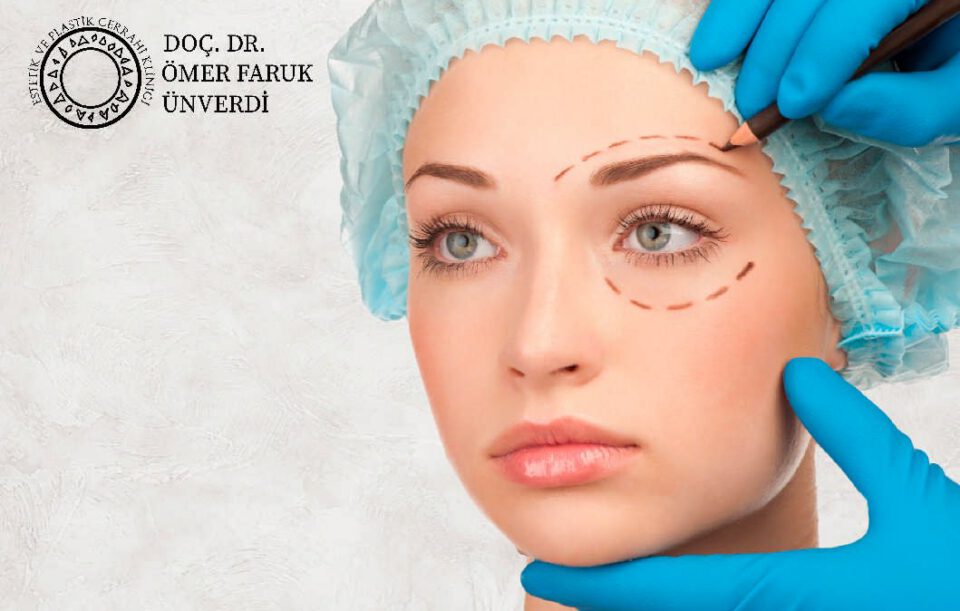
Eyelid surgery (blepharoplasty) is the surgical correction of drooping upper eyelids and under-eye bags in the lower eyelids caused by aging, genetic predisposition, or fatigue. Giving the gaze a more rested, vibrant, and youthful appearance, this operation serves both as an aesthetic enhancement and, in some cases, as a functional intervention that expands the field of vision. In this article, we cover in detail who blepharoplasty is suitable for, how the surgical process unfolds, what to expect during recovery, and the most frequently asked questions.
What Is Eyelid Surgery?
The eye contour has the thinnest and most dynamic skin on the face, which is why signs of aging appear here first. Over time, excess skin and sagging develop on the upper eyelids, while puffiness due to fat herniation forms in the lower eyelids. During blepharoplasty, excess skin, lax muscle tissue, and, if necessary, protruding fat pads are reshaped. The goal is to impart a rested and balanced expression without altering the person’s natural eye shape.
Upper Eyelid Surgery
In upper blepharoplasty, the incision is concealed within the natural crease line of the eyelid. Excess skin and, if needed, a thin strip of muscle are removed. Because the scar remains hidden within the eyelid fold, it is very difficult to notice once healing is complete. In patients whose visual field has narrowed due to heavy eyelids, the procedure also provides significant functional relief.
Lower Eyelid Surgery
Lower blepharoplasty is performed for under-eye bags and skin laxity. The fat pads responsible for puffiness are either repositioned or conservatively reduced, smoothing out the transition between the lower eyelid and the cheek. If there is no excess skin, it is possible to work without any external scar at all using the transconjunctival technique, where the incision is made on the inner surface of the eyelid.
Who Is a Suitable Candidate?
- Individuals who constantly look tired or stern due to sagging upper eyelids,
- Those bothered by the appearance of under-eye bags and dark shadows,
- Individuals whose drooping eyelids have begun to restrict their visual field,
- Adults in good overall health suitable for surgery who have realistic expectations.
Definitive candidacy is determined through a detailed clinical examination. Conditions such as dry eye syndrome, thyroid disorders, and bleeding tendencies can influence surgical planning; therefore, it is important to share your complete medical history with your physician during the initial consultation. In cases accompanied by brow drooping, blepharoplasty can be combined with a brow lift to achieve a much more balanced result.
How Does the Surgical Process Progress?
Blepharoplasty is mostly performed under local anesthesia accompanied by sedation, though general anesthesia may be preferred for combined procedures. The average operating time is 45–60 minutes for the upper eyelids alone, and 1.5–2 hours when all four eyelids are treated together. Most patients are discharged on the same day.
- Consultation and planning: Eyelid anatomy, skin quality, brow position, and fat distribution are evaluated; clinical photographs and precise measurements are taken.
- Operation: Using the planned technique, excess tissue is removed or repositioned, and the incisions are closed with fine aesthetic sutures.
- Discharge and follow-up: Patients return home the same day; sutures are typically removed on days 5–7, and healing is monitored through regular follow-up visits.
Recovery Period
Applying cold compresses during the first 48 hours significantly reduces swelling and bruising. Edema and bruising mostly subside within 7–10 days, and a large proportion of patients can return to their social lives and desk jobs after one week. Key precautions during the first few weeks include:
- Sleeping with your head elevated,
- Avoiding strenuous exercise and bending forward during the first few days,
- Protecting the eye contour from direct sunlight and wearing sunglasses outdoors,
- Using the eye drops and ointments prescribed by your physician regularly.
Scars may appear slightly pink during the first few months, but fade within 3–6 months to become nearly invisible within the natural eyelid crease. The final result becomes clear once all swelling has completely resolved—typically starting from the 3rd month onward.
Frequently Asked Questions
Is the surgery painful?
Thanks to anesthesia, no pain is felt during the procedure. Mild tightness and stinging sensations afterward are easily controlled with simple pain relievers.
Are the results permanent?
Upper eyelid results generally last 8–10 years or longer, and recurrent bagging in the lower eyelids is rare. Although aging is an ongoing process, the procedure effectively "turns back the clock" and rarely returns to its preoperative state.
Can eyelid rejuvenation be performed without surgery?
In cases of mild laxity, energy-based treatments such as laser lift and fractional laser can provide skin tightening; however, when there is pronounced excess skin and fat herniation, no non-surgical method can match the results of surgery. Which option is right for you becomes clear after an examination.
Will the surgical scar be noticeable?
On the upper eyelid, the scar is hidden within the natural fold; on the lower eyelid, there is no external scar at all with the transconjunctival technique. Once healing is complete, scars are difficult to detect even upon close inspection.
Eyelid Surgery in Antalya
Assoc. Prof. Dr. Ömer Faruk Ünverdi performs eyelid surgery with personalized planning at his clinic in Antalya. You can schedule a complimentary initial assessment with our FEBOPRAS (European Board of Plastic, Reconstructive and Aesthetic Surgery) certified surgeon via our contact page, and explore further details of the procedure on our eyelid surgery page.
Note: This article is for informational purposes only; a physician consultation is required for diagnosis and treatment.

