
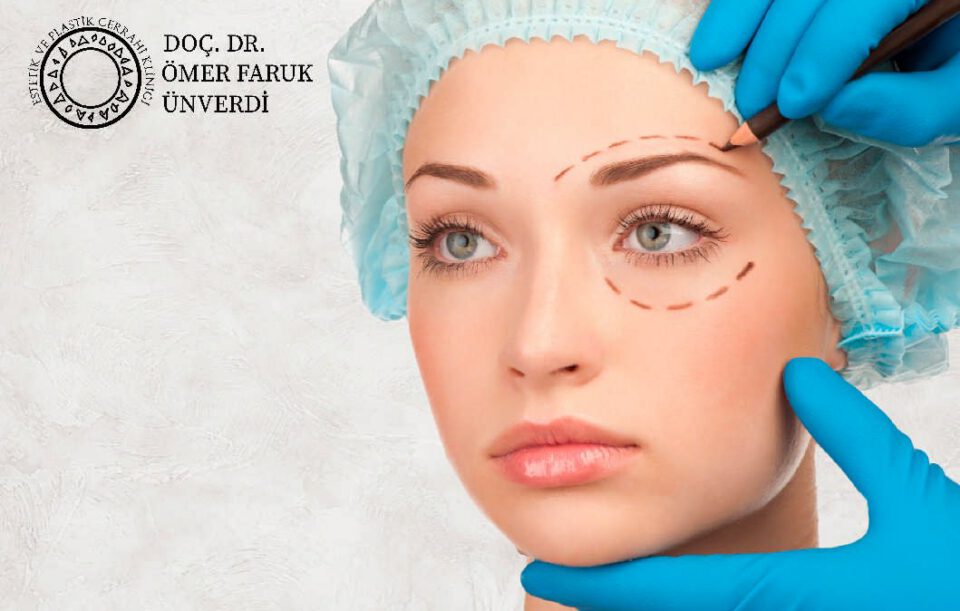
Lower eyelid bagging is one of the most common signs of aging that people notice when looking in the mirror. Most people assume that this puffiness under the eyes occurs solely due to lack of sleep, stress, or fatigue. In reality, however, true under-eye bags are rooted in complex anatomical changes. In fact, in some individuals, noticeable bags can be seen even at a young age. The reason for this is not only lifestyle, but also genetic predisposition and the anatomical characteristics of the periorbital region.
Our eyes sit within a bony cavity called the orbit. Inside this space are the eyeball, the muscles that control eye movements, nerves, blood vessels, and fat tissues that cushion and protect the eye. In fact, the fat pads around the eye are extremely important; they allow the eyeball to move smoothly and protect it from impact. Under normal circumstances, these fat tissues are held in place by a thin yet strong connective tissue membrane called the orbital septum. At a young age, this structure is quite firm and prevents the fat pads from protruding forward. However, as age advances, the connective tissues begin to loosen. Just like a fabric that loses its elasticity over the years, the orbital septum weakens. As a result, the fat tissues around the eye begin to shift forward, and under-eye bags become visible.
When the anatomy of the lower eyelid is considered, it becomes easier to understand why bagging becomes so prominent. The lower eyelid does not consist merely of a thin layer of skin. On the outermost surface lies some of the thinnest skin in the human body. Immediately beneath this skin is the orbicularis oculi muscle, which enables the eye to close. Deeper still lies the orbital septum, and behind it are the fat pads. There are generally three distinct fat compartments in the lower eyelid: the medial (inner), central (middle), and lateral (outer) fat pads. In every patient, the appearance of under-eye bags varies according to the size of these fat pads and the degree of their forward displacement. For this reason, even if the under-eye bags of two patients look similar, the surgical plan to be applied may be completely different.
The aging process is not limited solely to the forward protrusion of fat. At the same time, volume loss occurs in the transition zone between the lower eyelid and the cheek. The cheek region, referred to as the midface, gradually descends over time. As a result, the bags under the eyes appear even more pronounced. In fact, in many patients, the issue is not just the enlargement of the bag, but the hollowing of the area right beneath it. Therefore, in modern eyelid surgery, not only removing fat, but in some cases reshaping the fat or repositioning it into hollow areas has gained great importance.
Another issue frequently mentioned by patients is that the bags are more noticeable in the morning hours. The reason for this is entirely physiological. When the human body, which remains upright throughout the day, shifts to a horizontal position at night, changes occur in fluid circulation. In particular, the lymphatic drainage system works more slowly during the night. The loose tissues around the eyes are highly prone to retaining fluid. Consequently, fluid accumulates in the eyelids and under the eyes overnight. When we wake up in the morning, swelling (edema) is added on top of the existing fat bags. A high-salt diet, alcohol consumption, insufficient sleep, allergic conditions, and smoking make this condition even more pronounced. As we start moving during the day and fluids redistribute under the effect of gravity, part of the puffiness subsides. However, true fat bags do not disappear completely throughout the day.
Under-eye bags are often accompanied by dark circles and discoloration. There are anatomical reasons for this as well. First of all, the lower eyelid skin is extremely thin. The blood vessels and muscle structures beneath the skin easily show through, which can lead to a bluish or purplish tint under the eyes. In addition, the hollow groove formed immediately below the bag causes light to reflect differently. The human eye often perceives this shadow as dark discoloration. In fact, in some patients there is no true skin pigmentation change; there is only the shadow effect created by the bag. Furthermore, the loss of volume in the soft tissues under the eyes and the increased prominence of the underlying bone structure with aging can also intensify the appearance of dark circles.
One of the most commonly performed methods today for treating under-eye bags is transconjunctival blepharoplasty, popularly known as scarless lower eyelid surgery. In this method, the incision is made on the inner surface of the eyelid. Consequently, no incision scar is formed on the external skin. The surgeon accesses the fat pads from the inside of the eyelid and performs the necessary adjustments. While excess fat tissue is removed in some patients, in others the fat tissue is preserved and repositioned toward the hollow areas beneath the eye. This approach yields more natural results. Particularly in young and middle-aged patients without significant skin excess, it provides highly successful outcomes.
One of the most important advantages of scarless eyelid surgery is the preservation of the natural anatomy of the eyelid. Because no external incision is made, there is no scarring issue. At the same time, the risk of complications such as downward pulling of the eyelid (lid retraction) or a rounded eye appearance is lower. Patients generally recover faster and can return to their social lives in a shorter period.
However, not every patient is suitable for the scarless method. If there is significant excess skin, advanced wrinkling, or muscle laxity under the eye, the classic approach called transcutaneous blepharoplasty may be preferred. In this method, the incision is made just below the eyelashes. In this way, the surgeon can address not only the fat bags, but also the excess skin and loosened muscle tissues. More effective results can be achieved particularly in older age groups. However, surgical planning must be carried out with extreme care in this method. If too much skin is removed or insufficient support is provided, downward pulling of the lower eyelid may occur.
In recent years, with advances in laser technologies, LaserLift treatments have also come to the forefront for certain patients. However, it is important to remain realistic here. Laser applications are not procedures that eliminate large fat bags. Rather, they benefit patients who have mild skin laxity, show early signs of aging, and have minimal puffiness. They can improve skin quality, reduce fine wrinkles, and create tightening around the eyes. However, in patients with prominent fat herniation, laser treatment cannot replace surgery.
Although lower eyelid surgery may look like a minor operation from the outside, it is one of the most delicate procedures in facial aesthetic surgery. This is due to working in millimeters and the functional importance of the eyelid. The surgeon cannot simply look at the bag alone; they must evaluate the amount of fat, the position of the eyeball, cheek support, skin quality, and eyelid tone all together. Today, the secret to successful results is not aggressively removing fat, but rejuvenating the face while preserving its natural anatomy. Due to excessive fat removal procedures frequently performed in the past, a hollow and aged appearance emerged years later in some patients. Therefore, experience and anatomical knowledge are of paramount importance.
The postoperative recovery process also affects the quality of the results. Seeing swelling and bruising during the first few days is normal. Keeping the head elevated, applying cold compresses, and avoiding strenuous physical activities accelerate healing. The eyes should not be rubbed, and medications prescribed by the doctor must be used regularly. Artificial tear drops are frequently used to prevent dryness of the ocular surface. Depending on the surgeon's recommendation, antibiotic ointments may also be applied.
For optimal wound healing, keeping the incision line moisturized is important. In patients who have had an external incision, silicone-based scar products can be used once the wound has completely closed. These products are generally applied as a thin layer twice a day and, when used regularly for several months, can help the scar mature better. In addition, sun protection is crucial. Particularly during the first six months, using high-SPF sunscreen and avoiding direct sun exposure are recommended.
Another question many patients wonder about is whether the bags can recur. The results achieved after a successful surgery last for many years. However, the aging process never stops. Genetic predisposition, smoking, heavy sun exposure, chronic allergies, frequent weight fluctuations, and lifestyle factors can cause new changes over the years. Therefore, surgery does not stop aging; it simply turns the clock back significantly.
In conclusion, lower eyelid bagging is not a simple cosmetic problem, but the outward reflection of complex anatomical changes around the eyes. The forward displacement of fat tissues, loosening of connective tissues, descent of the midface, and changes in skin quality combine to create this appearance. Today, with proper patient selection and the right surgical technique, it is possible to achieve highly natural, long-lasting, and rejuvenating results. However, for this, being evaluated by a plastic surgeon who knows eyelid anatomy thoroughly and is experienced in facial rejuvenation is of great importance. In this way, not only are the bags eliminated, but the person is also given a more rested, vibrant, and youthful appearance.

